
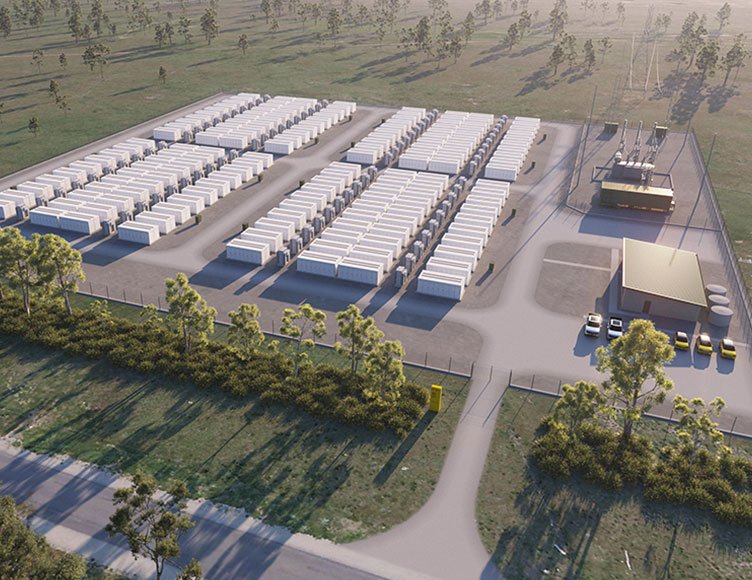
Independent review of battery storage pricing, grid connections and project development across Switzerland and selected European markets — sourced, not asserted.
These analyses are working notes from BESS development in Switzerland and selected European markets, published because the questions they address rarely have a clear public answer. They are aimed at industrial sites weighing storage behind their own meter, landowners assessing what a plot is actually suited to, and developers and partners defining the next technical and commercial steps for a project.
Each piece takes a single decision and follows it to the evidence: how dynamic grid tariffs differ from contractual flexibility; what a Swiss grid connection contribution really costs and why it varies so widely between operators; whether a battery belongs behind an industrial meter or at a grid node; what separates a ready-to-build project from a greenfield one; and what makes BESS development in Switzerland structurally different from its neighbours.
Figures are sourced to named regulators, grid operators and market analysts, and linked so you can check them. Where the evidence supports a narrow claim, we make the narrow claim. Nothing here is a projection for any specific project, and nothing here is investment advice — it is development analysis, written for the people who have to make the call.
Our system analyses ask where BESS complements Swiss hydropower across response times, locations and storage durations, and what a battery must prove to support grid frequency through inertia, FCR, aFRR or mFRR.
Our latest grid-connection analysis explains how to read Swissgrid’s new BESS connection-capacity maps — and why an indicative transmission-grid figure is only a first screening step.
Our British case study examines what UK Gate 2 does — and does not — establish, illustrating the development-review questions behind a project’s stated status.
How to read feed-in, feed-out and flexibility cases — and why the published figures do not yet model a battery’s storage capacity or establish a site-specific connection.
Read the analysis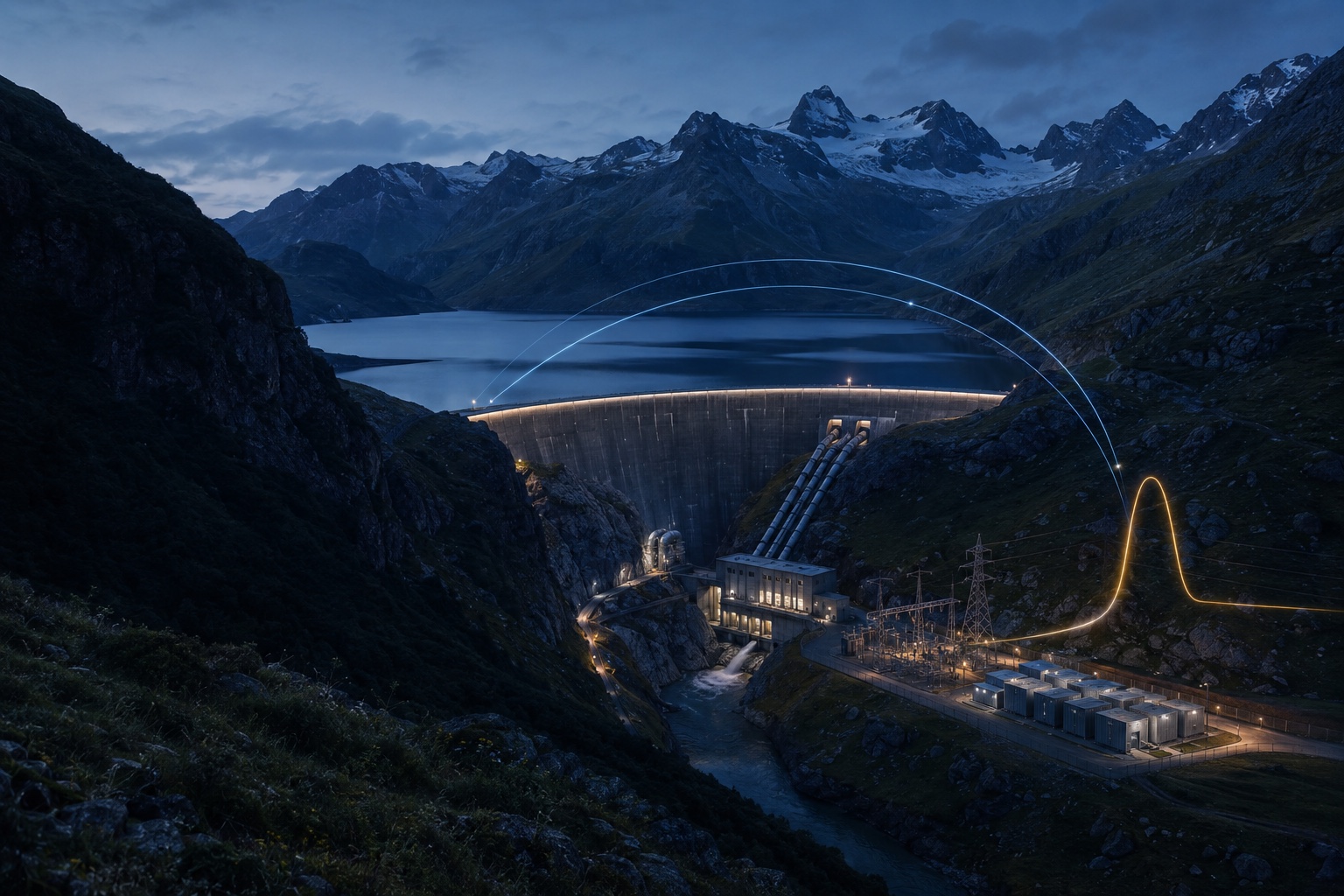
Switzerland already has extensive water storage. The development question is where battery speed, cycling and grid location add a distinct role — and why multi-hour BESS should not be confused with seasonal storage.
Read the analysis
Milliseconds, seconds and minutes are different services. How inertia, FCR, aFRR and mFRR fit together — and the evidence a Swiss battery project needs before claiming frequency support.
Read the analysis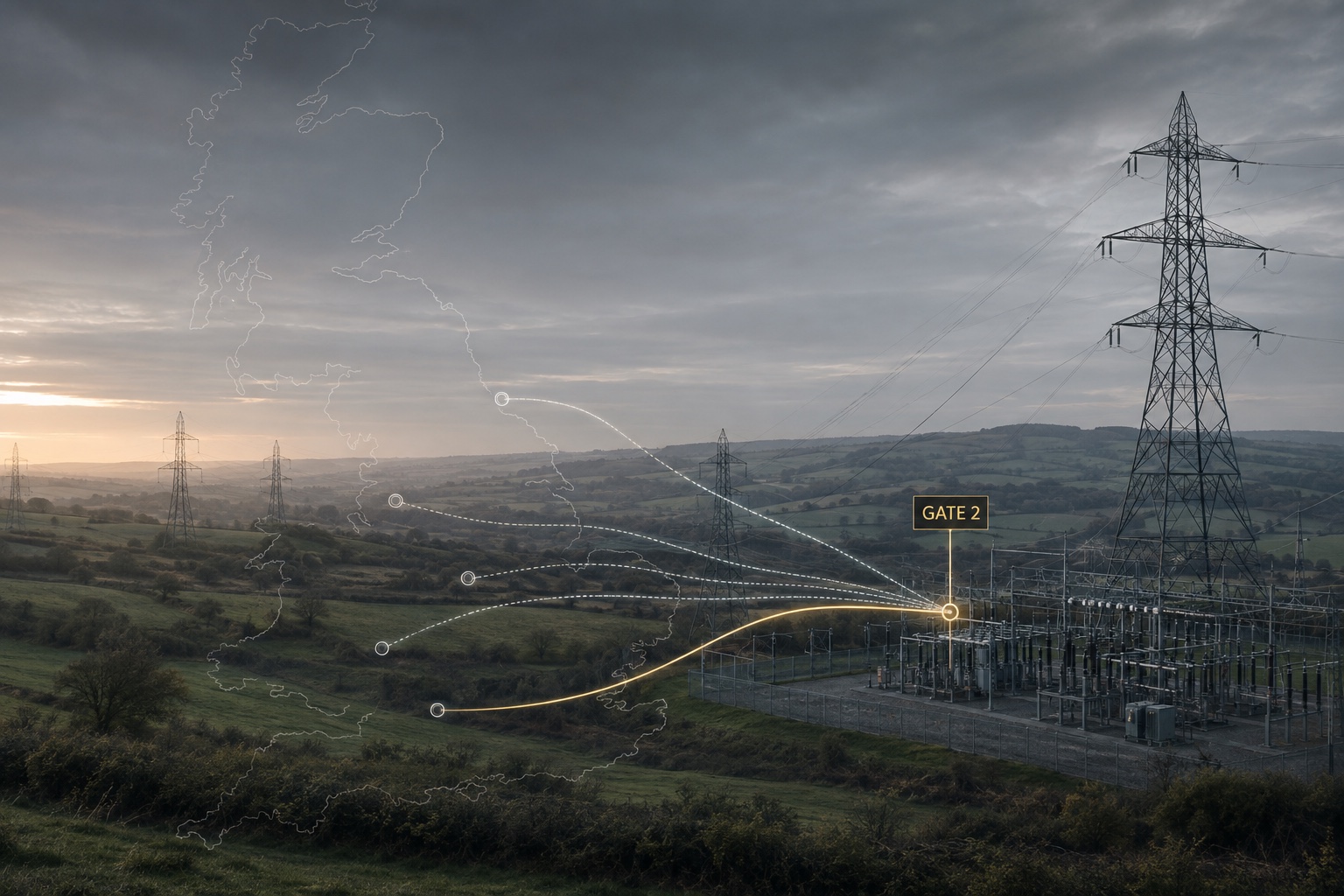
Britain’s connections reform is a case study in project assessment. What Gate 2 establishes, why battery pipeline figures need context, and the six checks that distinguish a queue position from a deliverable project.
Read the analysis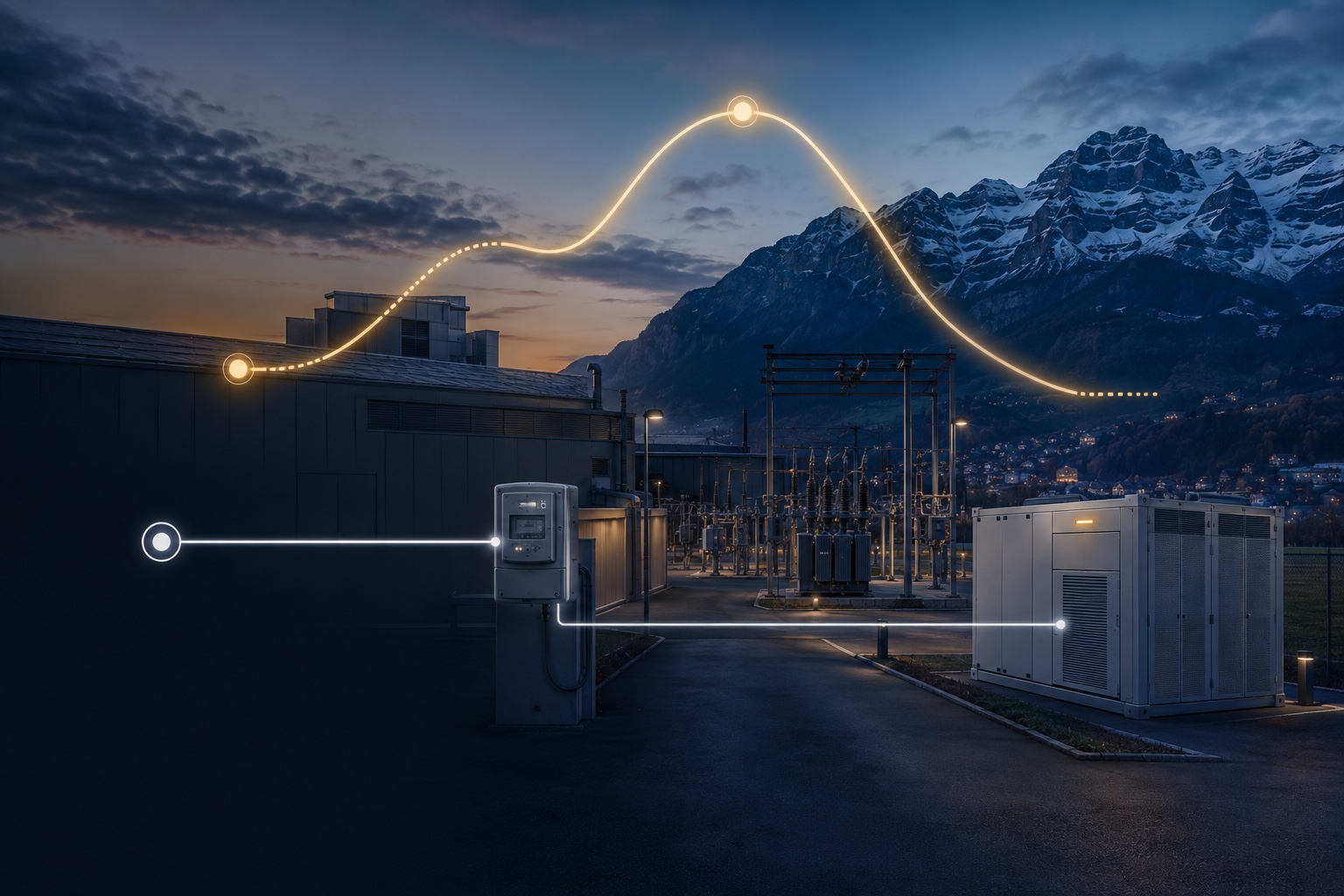
Switzerland's 2026 rules distinguish a changing network-tariff signal from a contract that gives the DSO defined control rights. What the first published products show — and what an industrial BESS must verify before the tariff enters the dispatch model.
Read the analysis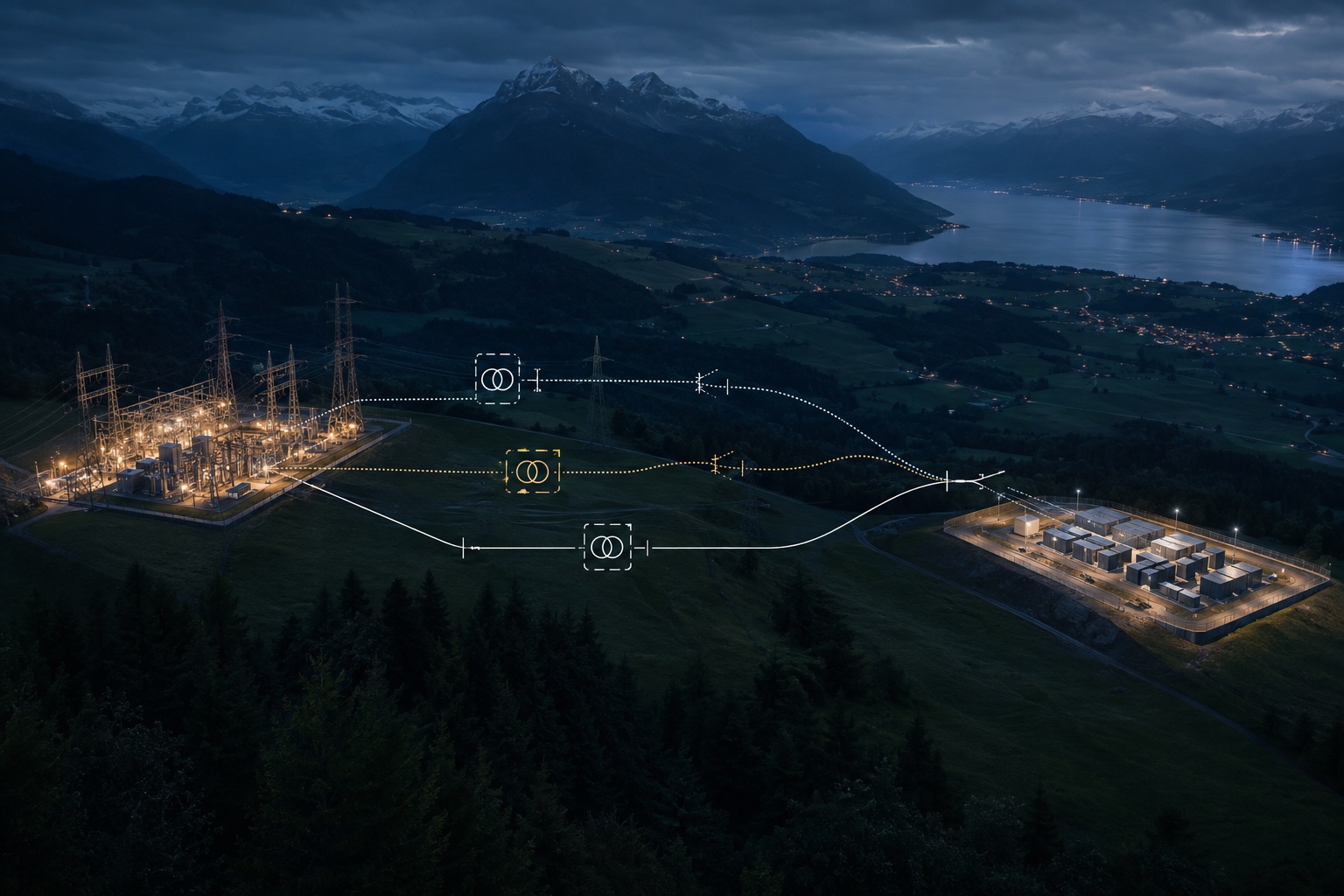
Since 2025, standalone storage without end consumption is exempt from network-use charges. The one-off Netzkostenbeitrag remains: it is charged on contracted withdrawal capacity and is not a refundable usage tariff. One published schedule quotes CHF 112,000–648,000 for the same 8 MW connection at different network levels.
Read the analysis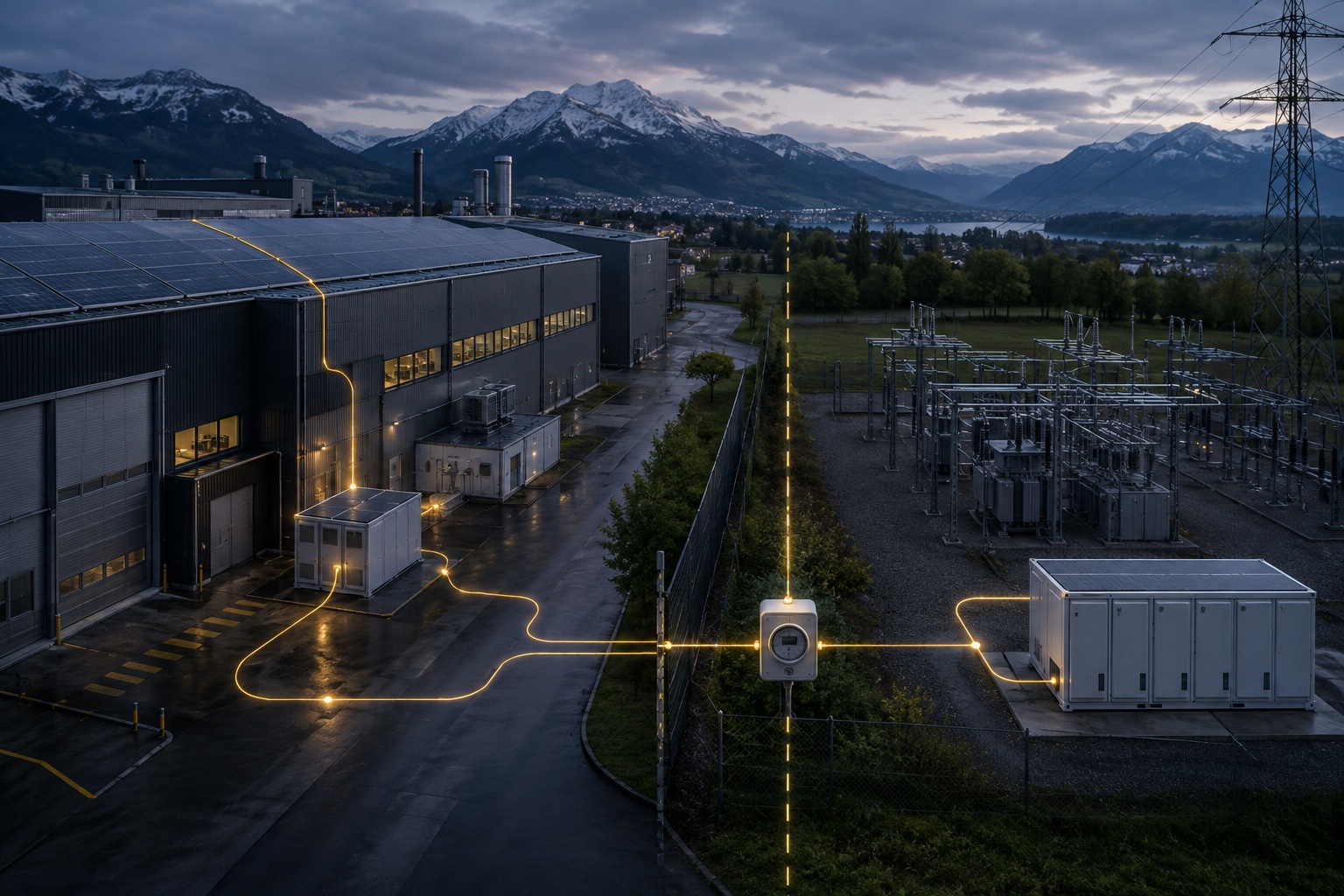
Some reserve-capacity products face growing competition as battery fleets expand. Switzerland's 2026 FCR allocation is about 80 MW—not its entire balancing market. How an industrial site's own load changes the siting and sizing case.
Read the analysis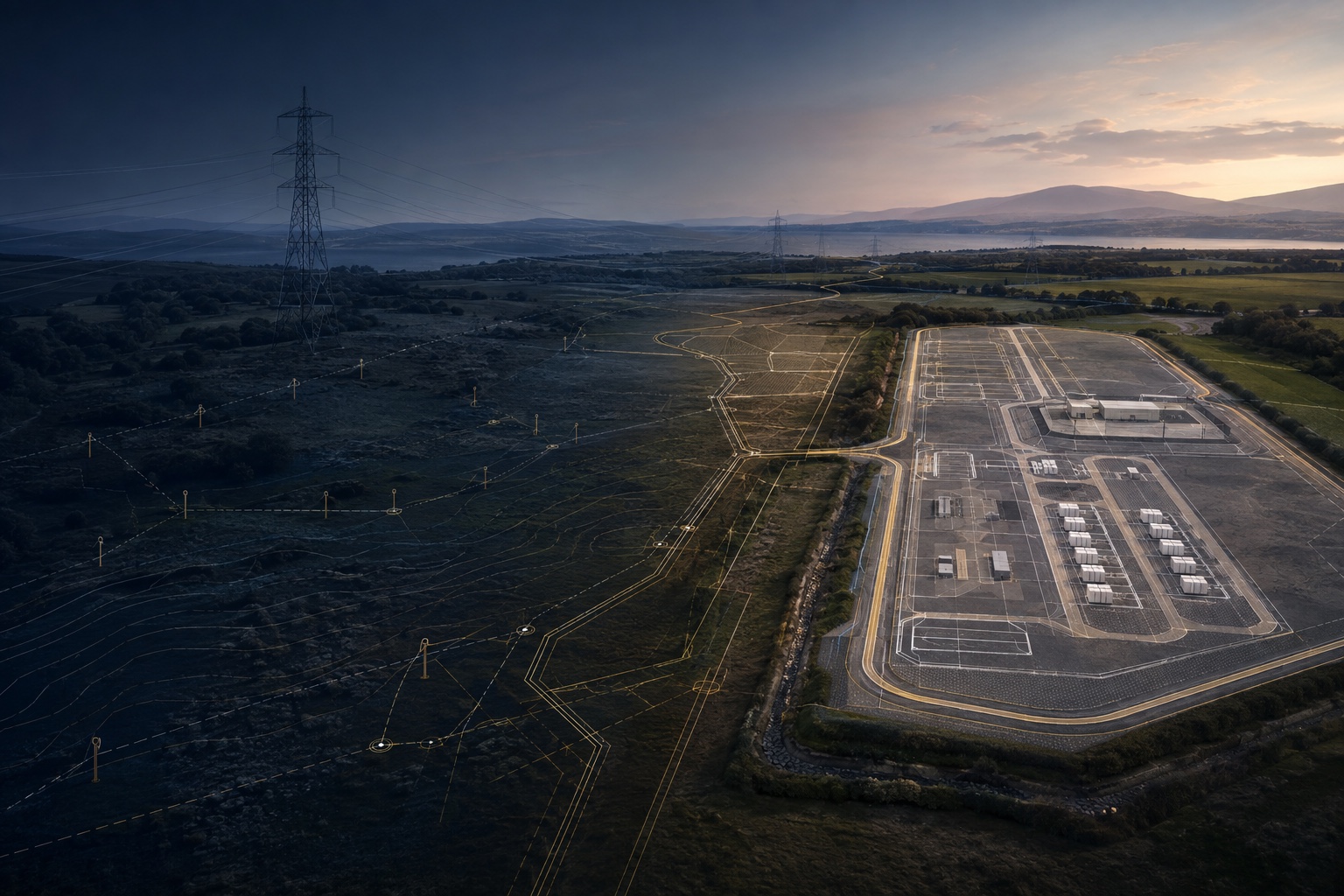
German and Italian development-cost and RTB price references, applied to Swiss BESS development. What the figures measure—and why they do not establish a universal net development margin.
Read the analysis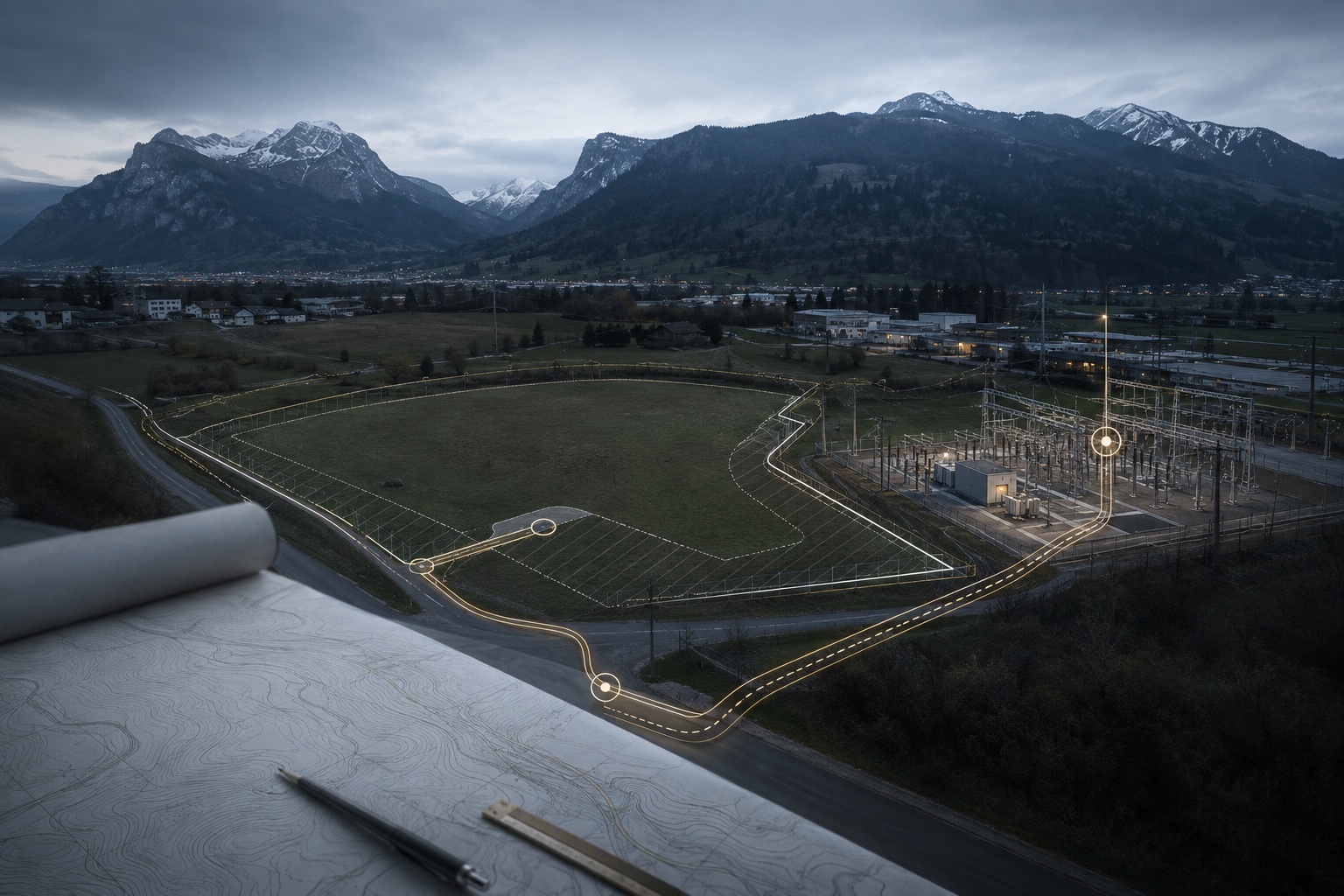
What gates a Swiss BESS project: operator-specific connection capacity and network level, land-use suitability and applicable electrical plan approval. What a site must establish before development proceeds.
Read the analysisLooking for a project narrative rather than market data? Visit Case Studies.